
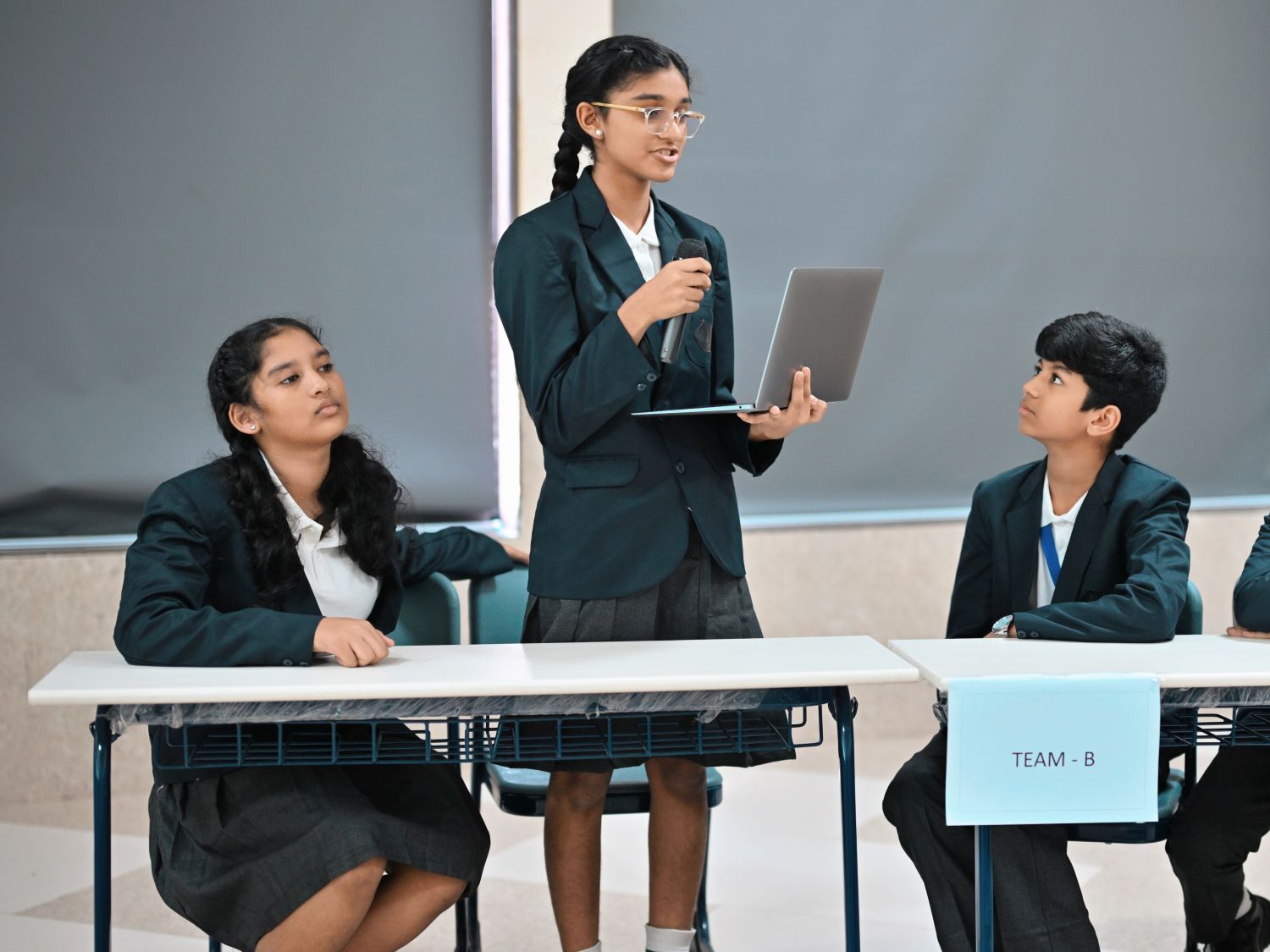
Strategic Persuasion

DEFEND VIEWS WITH Confidence

We empower students to find their voice through the friendly exchange of ideas.

Whether debating fun everyday topics or exploring more complex issues, students learn how to organise their thoughts, support opinions with evidence, and express their ideas in their own unique way.

Our Lessons

Build big ideas into a strong ARCHITECTURE

Our Debate Skills curriculum helps students think critically, build strong arguments, and respond to different viewpoints with confidence and clarity.

Building Strong Arguments

Learn how to structure ideas clearly using PEL (Point, Evidence, and Link) Framework to create convincing arguments.

Learn to respectfully and calmly respond to opposing views by using clever starters to address opposing views skillfully.

Making use of tone, pacing, emphasis, and pauses to make arguments more engaging and impactful.

Learn how to analyse everyday life topics from different perspectives and identify strong discussion points.

Understand the strategic roles within a debate team. From the Opener who sets the tone to the Closer who leaves the audience with a powerful impact.

Practice the confidence to express arguments clearly and respond effectively under unpredictable pressure.

accordion image
accordion image
accordion image
accordion image
accordion image
accordion image

Start Your Child’s Communication Journey Today

Get in touch to book a trial or learn more about our programmes!

Frequently Asked Questions

How are students prepared to handle hard rebuttals from opponents during a live session?
Students are gradually taught how to stay calm, listen carefully and respond thoughtfully under pressure. Rather than reacting emotionally or defensively, students learn how to identify key points, organise their responses and communicate disagreements respectfully. The focus is not on “winning arguments,” but on developing clear thinking, adaptability and confident communication.
Depending on the activity and age group, students may be encouraged to prepare ideas or gather information beforehand. However, lessons also include guided discussions and spontaneous thinking activities to help students learn how to respond even when they are not fully prepared. The goal is to develop both critical thinking and communication flexibility.
Debate encourages students to consider different viewpoints and understand why people may think differently from them – developing empathy and respect for others even when they disagree. Students learn to question assumptions, evaluate ideas thoughtfully and respond to opposing views with maturity rather than defensiveness. Over time, this helps build stronger reasoning skills, more considered communication habits and a genuine ability to see beyond their own perspective.
Yes. Debate requires students to listen carefully, identify key arguments and respond appropriately in real time. Students often practise listening for important points, organising information quickly and keeping track of ideas during discussions and rebuttals. These skills may also support classroom learning, discussion participation and academic communication more broadly.
Yes. Debate topics and activities are adjusted according to the students’ age group, maturity level and communication ability. Younger students may discuss simpler, more relatable topics, while older students may explore more complex social, ethical or real-world issues. The aim is to keep lessons engaging, age-appropriate and intellectually stimulating.

For children aged 6–7, we introduce a personalised beginner debate module that focuses on building confidence in speaking, listening, and expressing ideas clearly. At this stage, children learn foundational debate skills such as turn-taking, sharing opinions respectfully, and responding to simple questions in a supportive environment.

Topics are designed to be fun, relatable, and age-appropriate, such as favourite animals, school activities, or light-hearted choices like “Which is better — cats or dogs?” Through guided discussions and interactive activities, children gradually develop confidence, speech clarity, and early critical thinking skills.

As students grow older, debate activities become more structured and analytical, allowing them to explore more complex ideas, social issues, and persuasive argument-building in an engaging and intellectually stimulating way.

We understand that not every child is naturally outspoken, and students are not expected to become strong debaters overnight. Lessons are structured progressively, with teachers providing guidance, support and appropriate challenges based on each student’s confidence and readiness. Debate is not only about speaking loudly or quickly. Quieter students often do very well when they learn how to organise their thoughts clearly and respond thoughtfully. Our goal is to help students gradually become more comfortable expressing their ideas, disagreeing respectfully and participating with confidence in a supportive environment.
Shopping cart close